Monday, January 01, 2007

Runaway Monkey


Koenji KFC

Col. Sanders was out late last night. I think all of his likenesses have immigrated to Japan, where they like to hang out near the Drunk Raccoons and mechanical cats waving one paw.


window displays

No one knew where he came from, but a rogue monkey terrorized Tokyo a few years back. He broke into homes and stole food all over town, escaping every time across the rooftops before striking again. When he was finally captured, he was checked and found to be healthy. Just lost.

I didn't realize Japan had wild monkeys who live in the mountains far from Tokyo. There's not enough time during this visit to go to that distant place, but filmmakers have documented monkey families soaking in hot springs just like humans do.

There was a naughty monkey in the Akita Zoo. He would perch himself at the front of his cage and puff his cheeks out, looking cute. When an unsuspecting visitor drew close enough, perhaps to shoot a photo, he would splatter them with water he was holding in his mouth for just such an opportunity. Then he would clap his hands and screech with laughter at having tricked a human monkey.


little red truck

It's a gray, cool day here in Tokyo. Maybe I'll go out for a walk. The first day of the New Year is now night in the States. Here it is noon on the 2nd.


bamboo screen
-30-

Holy Places


I saw these two women on the train today coming back from a religious shrine I visited in Chiba. People in white uniforms bowed all along the way to the temple. They repeated over and over the phrase,"Congratulations on the New Year."

The faithful in this particular religion, which is related to both Shintoism and Buddhism, number nearly 900,000 in Japan. Today, people came both from Tokyo and from the countryside. The former wore the short skirts and boots and fancy hairdos of the fashionable; the latter wore simple clothes and often had rugged faces from working in the sun. Some of the country people actually stared at me, the only obvious gainjin who was present this afternoon, among thousands of Japanese pilgrims.

For the first time during this visit, I felt conspicuous. Since I do not share any religious belief, the best I could do was to bow politely to the faithful, but I could hardly pray, though I tried to a little bit. Many of the displays in the buildings I toured told the story of founder of this church, who passed away in the 1980s. There were the early implements he used as he carved his beliefs out of the earth. There was the simple, elegant rooms where he prayed and studied.

Inspired by his quest to find meaning in life, people gradually joined him, and together they built a magnificent garden, with waterfalls and blossuming trees, rock sculptures, and beautiful temples.

So this place I visited today, 1.5 hours from Koenji, truly felt like a spiritual place. It was so nice to see all of the people who were visiting the shrine, and how happy it made them to be there. This clearly is a compassionate religion, where the faithful devote themselves to try and be better people, kinder, and more forgiving of others.

***


Afterwards, I visited a place that is the polar opposite of the temple -- the largest store in Tokyo, filled with every consumer item imaginable.


It was WalMart on steroids, nine vast floors of consumer goods sold at discount prices. There were too many choices: I felt over-stimulated, and had to leave. I like the small shops with the mechanical cats in the window.


So, my journey took me from the Holiest to the Unholiest of places in one afternoon! Along the way I noticed an advertisement for the Happiest Place on Earth, which is a precise replica of the original in Anaheim. This New Year, 2007, is well underway in Japan, while back in my country, my alma mater is preparing for the second half of play in the Rose Bowl in Pasadena.

Go Blue!

-30-

Sunday, December 31, 2006

Warding off evil spirits


You can lay out some salt. Or you could bathe yourself in holy smoke. Or sip the holy water. Also, you can buy an arrow.

In every store window is the comical cat figure, waving one mechanical paw at you, blessing you and bringing good luck your way.


Eating the yummiest sautéed squid at midnight, with sashimi salad, and rice, I watched the New Year arrive on the Japanese public television station, NHK. Unfortunately, I could not understand a word they said (except for arrigato, domo, moshi moshi, go chi so sama, hai, konichiwa, etc.)

Mainly, it was a song and dance extravaganza with many of the country's top performers on hand, and elaborate costumes arrayed in an elaborate choreography. An almost impossibly beautiful actress seemed to be the main host -- tall, slender, long black hair, perfect shaped face with a warm smile and sparkling black eyes.


The longer I am here, the more people I meet and questions I ask, the more concerned I become for the future of the Japanese. Today, Tokyo is Asia's greatest city, and the Japanese economy is humming along all right, though the rapid expansions of Korea and China make Japan look like it is moving in comparative slow motion.

But Japan's tremendous asset, which is the Japanese people themselves, is also its greatest problem. The homogeneity of the people is awe-inspiring. As one Japanese woman told me, "Look at us, we all look more or less the same. Of course some are taller or some are smaller and so on. But basically we all look very much like each other. And we think and act like each other too."

The population of Japan does seem to behave almost like one giant organism. What dissent there may be from social mores seems to rarely be expressed in public. As I've noted, even the notorious gangsters, the Yakuza, are invariably polite and modest toward others.

Everyone bows and thanks each other for almost any interaction that occurs. Just going to the restroom in a restaurant invariably involves the attempt to allow someone else to go in first; or upon exiting, to bow and excuse oneself to another who may have been patiently waiting outside the door.

Because Japanese will not speak to strangers, nor look anyone in the eye, they actually have a hard time meeting one another. There are definitely ways for people to flirt, for example, but it's hard to imagine a culture more distant from the open flirtatiousness of Brazilians, say, than the Japanese.


Only 1.5% of the population is non-Japanese; most of them Chinese or Korean. The Japanese do not always regard these groups favorably. They are included as gaijin (foreigner), along with Europeans, Africans, and Middle Easterners, etc.

Most of the Chinese flocking to Japan are students, and see a potential opportunity to graduate and then create careers here. It is somewhat comical to see how the Chinese and Japanese regard each other. The one is viewed as overly loud, pragmatic, self-assured; while the other in seen as too deferential, modest, and exceedingly quiet. It's not hard to see why they don't get along so well.

Although Americans seem to be the best-liked gaijin here, many Japanese do notice that American tourists tend to be large, loud, somewhat self-absorbed people. However, when interacting with Americans, the Japanese are so warm and polite and accommodating, most of us probably do not intuit any critical feelings whatsoever.

There is a strong undercurrent of discontent with U.S. policies, however. The Bush administration's extremely unpopular wars cause a lot of grumbling, especialy among Japanese men.


One of the main problems for the Japanese is that they are not reproducing themselves at high enough rates to sustain their aging population. Unlike the U.S., Japan has not opened its borders to the waves of immigrants who could revitalize the economy, and provide a domestic workforce to replace the dwindling number of Japanese of working age.

Another issue is how to foster more entrepreneurial activity here. A small but influential group of the country's top entrepreneurs still choose to leave for the friendlier environs of Silicon Valley, where they much more easily can make fortunes and explore promising technologies.

(Interestingly, Japan does not really have much of a "super rich" class like America tolerates. It is not seemly to become grandiose and pretentious. Wealthier Japanese often get involved in socially responsible causes -- much like Americans -- but they do so quietly, not seeking notice or credit for this work.)

Their powerfully ingrained sense of collectivity helps them recognize global warming and other planetary issues without the political noise of a greedy oil and gas industry, or the politicians who suck up to it. They consume far less of everything (except seafood) than Americans; they recycle everything, and they never litter!

Tokyo, though ancient and sprawling, is by far the cleanest city I have ever visited. Dog-owners have long cleaned up after their pets, and they don't need regulations or signs or racks of plastic bags on fences to do so. They carry their empty water bottles until they find the proper dispenser. They clean up their own tables in restaurants. Their large army of janitors incessantly sweep up and discard any small crumbs or pieces of material that escape an ever-vigilant citizenry protecting the commons as if it were their common home, which of course it is.

I could never produce a website like Sidewalk Images here!

To try and be more explicit about my fears for Japan, how will they adapt to a globalized world, one where nationalities are rapidly losing power to the emergence of a new global society. The revolution in communications technology has been partly led by the Japanese. They all have cell phones, and almost everyone seems to be text messaging, photographing, or dialing one another constantly.

But it is essentially a conversation with oneself that Japan is engaged in. They are not talking enough to the rest of us!

Make no mistake about it, I love this country and these people. I think we Americans could learn so many valuable lessons by studying Japanese behavior and comportment. Here more than anywhere else on earth, I feel my strong loyalty to environmentalism, to healthy eating and living, to a quiet spiritualism inside my own soul, interlocking with all others.

To be Japanese is to feel connected to all life. There is no cruelty to animals here. (Many men carry dogs around in cozy little frontpacks, and they very cute together.) There is virtually no waste in this society. On the other hand, there is a terrible rate of alcoholism and cigarette smoking. But drug use is relatively rare, as is the violent crime rate, and disruptions of the orderly business of living quietly on the earth are rare.

I'm not unaware of Japanese history, and how rapidly they can be transformed into the fearsome wave of killers who raped Nanking, and demolished Pearl Harbor. As I have said, the kamikazes were the first international terrorists. So there are as many bad things to say about the Japanese as good things -- as is the case with every culture on earth.

I just wonder what this country and what these people will be like in 50 years. It seems possible that more tiny attempts here to document my visit may read like ancient history by then of a placid land before the Global Storm.

On behalf of the Japanese, I fear no amount of salt, holy smoke or water, arrows, shrines, or mechanical cats waving one paw can ward off the arrival of an unanticipated future.

-30-

Akemashite Omedeto!*


Ueno


Sensoji Temple


Philip Stark's rendition of beer foam graces the top of Asahi Beer's building. The locals call it the "Poop Building."


Pachinko Entrer


Nakamise


Fish in window


Asakusa

***

I tried to include a shot of me with my new friend, Tanuki, a drunken raccoon who graces the front of many a pub throughout Japan. But when I try to upload the image of Tanuki and me, we appear sideways, which in his case (since he is a drunk) makes sense. But when I ask my Japanese friends why Tanuki is a beloved fairy tale character, they say, "Your society just has to be around for a few more centuries, then you will understand why a drunken raccoon is a loveable character to us."

Anyway, since that photo upload failed, I leave you with this, as the year 2006 deserts us here in Japan, roughly an hour from now. That will still be 14 hours before the ball drops in Times Square. But here, there, or wherever I may be, as those who have known me the longest understand, there is one vegetable that is my eternal favorite. I have to admit I've never seen fatter ones than here, in the land of slender people.


Even though this too loads sideways, let that be my way of slipping into 2007! May yours be blessed with happiness, love, riches, good health, and exciting new developments!

(Mine will!)

-30-

* (Happy New Year!)

Saturday, December 30, 2006

Happy New Year from Japan


This country celebrates the Western New Year, not the Chinese Spring Festival. This weekend, here in Tokyo, everyone is out and about, having a good time. Tonight I had the most delicious Beijing Duck in a Chinese restaurant that remains open 24 hours a day, 365 days a year.

People still smoke inside restaurants in Tokyo. And this has to be the city with the most bars per capita of any in the world. I always thought San Francisco could claim that prize, but only, as it turns out, inside the continental U.S.

Here, people drink like there is no tomorrow. Even when drunk, however, they bow and offer others the chance to go into or out of an elevator, for instance, with respect and kindness. I have not yet seen a fight in Japan. The people do not seem to get angry when they drink; rather they get happy.

Tonight I saw the Clint Eastwood/Steven Spielberg film about Iwo Jima (the Japanese version, with English subtitles.) It was deeply moving to watch this among the Japanese. Many people cried.

I wish these two wonderful cultures -- Japanese and American -- could find a middle ground. We are not respectful enough. They are not independent enough. Together, we should make a perfect fit.

Akemashite omedeto!

Friday, December 29, 2006

Walking in Golden-gai


Shinjuku Station is so crowded! And immediately, on this blustery Friday night, I notice a transformation in the daytime crowd.

Then, they were all bustling about, eyes downcast, expressions serious, with few words spoken.

Now, after dark, they are traveling in clusters, smiling and laughing. Most are dressed expensively, stylishly.


One of the current controversies in Japan is over whether/how the national pastime, Sumo wrestling, could/should be extended to allow women to participate. As with everything involving gender politics here, it is complicated. The main issue, as I can make it out, is what kind of uniform the female wrestlers could wear. Obviously the sort of thong bikini thingies the men wear is not appropriate.

The women would need an entirely different costume. But Sumo is an ancient tradition, like Geisha, and there simply is no precedent for how to incorporate women into the sport, at least not yet.

My impression is that the Japanese will eventually figure this out, but not until the entire nation has contemplated it for enough time to have puzzled their way to a collective decision.


Of course, in Japan, nobody really makes personal decisions, as we do in the West. Here, the interlocking sets of responsibilities toward one another need to be taken into account before any substantive decision can be taken.

Only this cultural factor can explain how such a peaceful, gentle, even docile people could be whipped up into an imperialist frenzy, yielding the earliest terrorists (kamikazes) willing to crash their planes into U.S. targets -- a tactic never seen before in war.


My ten-year-old will be happy to know that the newest U.S. brand to penetrate the giant Tokyo market is his favorite donut company. It was fascinating to see hundreds of young, slender people standing in line in the cold night air over Shinjuku near Kabukicho to taste these delicacies. I bet the majority of Krispy Kreme's sales here will be one donut at a time.

In fact, I bet the girls will split a donut! I don't think they like to eat anything, let alone something so sweet, in as large a portion as a typical Krispy Kreme donut.
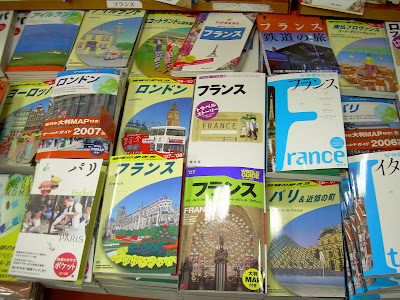


Into a huge bookstore, I had one of those experiences that people claim only happen to me. Everyone was bent over, treading ever so delicately, near the entrance to the store. A contact lens must have been lost. I joined the hunt, the only foreigner to do so. While the Japanese were performing a sort of delicate ballet in slow motion, first raising one leg, then the other, as they awkwardly navigated the area, I squatted down to see it all from a different angle.

Immediately, the lost lens materialized to my sight. Everyone broke into a loud state of excitement, bowing and thanking me over and over. Arrigato! Arrigato! Arrigato! I imagine they were passing the story down the line: "Did you see that? The foreigner found the missing contact lens. How extraordinary!"

I hope so at least; it would be nice to give them a happy story.


Finally, I have reached my true destination: the main red-light district of Tokyo. Giant posters reach into the sky flashing faces of the consorts within each establishment. Lovely female faces, hundreds of them.

But what's this? Here is a section identical to the last one but all of the faces are of gorgeous young men. Is this the gay section? No, I am assured, wealthy Japanese women visit these places to spend time with lovely young men.

(There also is a gay red-light district nearby, but I don't get to see it this night.)

In Japan, sex is something that it is said often happens outside of marriage. Once a couple has produced a child or two, many of them may stop having sex. If a married man after a certain age discovers his wife is once again pregnant, he will act as if he is terribly embarrassed, even if privately he is happy, and loves his wife and loves sleeping with her still.

Maybe this is because he does not wish to present himself as sexually unavailable when there are so many attractive women around. He may wish to be seen as not sleeping with his wife, but instead as consorting with a mistress, even if it is not true.

I cannot help but wonder, though, whether modern Japanese, like modern Chinese, and Vietnamese, and all Asians, may not be hungering for relationships more like the idealized (and virtually unattainable) Western marriage model. When I see Japanese men with children, for example, they are invariably gentle and loving, extremely attentive.

Yet, according to statistics I have seen, Japanese men spend less than half as much time with their kids as American men. (The top Dads in terms of time spent, according to the study, were Canadians.)

One last observation about the red-light district. I'm not entirely sure the local people come down here to actually have sex all that often. The foreigners do, of course. Many men come to Japan explicitly for this purpose and the Japanese brothels accommodate them. But maybe the Japanese themselves are more interested in engaging in elaborate pre-mating rituals.

They like to purchase time with a beautiful, refined young person. Many of these girls are college-educated and capable of conducting a sophisticated conversation on world affairs. After a long work week, some salary man spends their wages here, drinking and talking late into the night with beautiful young women.

Sometimes, if he pays even more, they may have sex. Other times, he may simply fall in love with one of these girls, and come back to drink and talk with her again and again, only rarely or never actually crossing over into actual sexual relations. It is an extended opportunity to flirt for a people who cannot ever do that openly outside of this district.

It is simply considered too rude even to look at another person suggestively. Men do not turn their heads to watch a woman walk by, they don't look them up and down, they do not whistle or make rude gestures or comments.

Instead, all is sublimated into a modern-day version of the ancient art of the Geisha.

Of course, all of the above is only speculation, and I certainly do not wish to imply that all Japanese men like the hostess bars. In the end, it is a game only the rich can play. You can easily drop thousands of dollars down here if you are not careful.

***

Very nearby this district is a magical discovery: Golden-gai. This nexus of five impossibly narrow alleys features 250 tiny bars, each of which can accommodate perhaps 8 people, max. The bars have hand painted signs, and just like the brothels, photos of the kinds of people who can be found inside.

So, there are pubs for musicians, for writers, for artists, for every kind of citizen or visitor. Some of the famous come down here to their favorite pubs, where the bartender and the locals all receive them warmly. There are drawings made by artists pinned over the bar -- gifts to the host.

He doesn't consider it as an object of potential value -- as something to sell on eBay for instance, but as a private token of the artist's respect. In these establishments, the bartender takes your order, and then cooks you a small meal. He tells you the history of the area, how in the 50s when an official crackdown on the brothels led by a feminist politician missed the private clubs that continued to flourish in Golden-gai, much like Speakeasies during American Prohibition. I'm unclear when exactly the little pubs took their place, but apparently there are no longer brothels in Golden-gai, just bars.

For 50 years, this magical little district where there are no motor vehicles, only foot traffic or bicycles, has offered safe harbor to Japanese of all ages and stations of life.

These are, truly, for many men, their "living rooms."

p.s. One word of warning for foreigners who may wish to visit Golden-gai. If you get easily offended by a system where are no set prices, stay away. The host, when sizing you up, may choose to do as mine did, and overcharge you by ten percent or so. This is fine with me, but may not work for you.

Art in the Mountains


No comments: