So, I admit it. Curiosity provoked me to look around, online, at how people find each other. I trolled the various sites, read the ads, and viewed some profiles.
Do I want to meet somebody?
Not really.
But if someone wonderful suddenly showed up in my life, in the here and now, I'm quite sure everyone who knows and cares and loves me would understand. I have those assurances.
But, one of my conclusions from exploring the online dating world is many, maybe most, people seem to be looking for sex, not love. This leads me to wonder whether most posters aren't married, or at least attached, whether they reveal that in their ads or not.
I suppose I understand that. I've been married a couple of times, and I understand that you could well find yourself in a situation where you don't want to lose the security of your marriage, particularly if you have kids (good), or your partner is rich (bad), or if you just need to feel safe while pursuing something that may feel exciting.
Call me weird. I've been married* and unmarried* and met many women in both conditions. I vastly prefer being unmarried, without obligations to another.
Why? Because I can honestly present myself as available. And, since my main goal is not only sex or friendship, but both (plus more), i.e., relationship, and since I understand that to involve emotionally truthfulness, the way people present themselves online interests me greatly.
Now, I understand why women, especially, may feel driven to conceal details of their identity when seeking to meet people online. But that creates the essential paradox. When ever you should meet, you just have to be you.
Tonight, taking my nightly walk, despite my medical advice to stay off my feet, I did what comes naturally on a warm night. As a child of the cold northern steppe, all I need is a T-shirt on a night like this. I encountered a woman I know, and she was wrapping her arms around herself, even while wearing a jacket.
Now, this is classic male-female stuff. She admitted she always feels cold. I said I always feel warm.
My advice to her: "You need a hug."
And, I'm quite sure she did. I do too.
But I don't know her quite that well, so my advice hung in the windless air above this neighborhood. But she did do one thing, and I don't know why. She jumped in the air and spread her arms and legs. Then she did it again.
Women are so strange! But also, of course, so very wonderful...
-30-
*I do not use these terms in their literal, or legal, sense, since there are many practical reasons to prolong marriages after they are essentially finished, including health insurance, tax breaks, and other important considerations.
Tuesday, October 17, 2006
We live in an empirical age...
...as well as a material one, of course.
“Few are those who see with their own eyes and feel with their own hearts.” -- Albert Einstein
After the haze and fog of recent days subsided, a crystal clear day greeted us in the Bay Area today. That didn't help traffic, which still sucked. But it did contribute to the kind of mood where you feel hypersensitive to details. Here, much like in Perth, Seattle, and other coastal cities, the light is special, so when the weather is right, almost every detail reveals itself.
“The only real valuable thing is intuition.” -- Albert Einstein
Albert Einstein had a way of expressing things succinctly, and in a way that encourages a person like me. One of my favorite quotations from him is:
“Everything that can be counted does not necessarily count; everything that counts cannot necessarily be counted.”
Thus, with all the numbers swirling around us these days (and despite my love of numerical patterns), tonight my goal is to honor the normative, non-numerical, instinctive, intuitive sides of life.
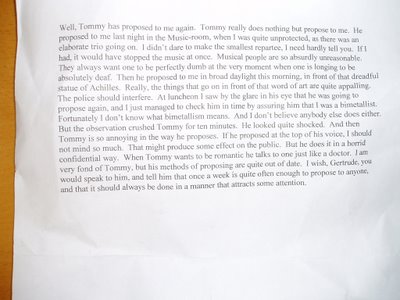
So, here is what came drifting down my street tonight. As I have mentioned before, one of my favorite new magazines is Found and this item is very much in that spirit.
(If you click on this or any of my photos, you will see a larger version.)
The problem with this one is, intuitively, that it does feel real to me, but contrived. I'd have to say this is most likely a writing exercise, a joke, or some lines from a play.
Just a guess, with no criticism intended to its author in case it is actually a real story.
Truth is, naturally, stranger than fiction, and there's a cliché I can live with.
***
Lately, I've had to endure some medical tests and a period of uncertainty over some strange symptoms. Though the results of most of the tests won't be known for a while, the most likely explanations now seem to be of the less frightening type, which is potentially some good news. Nevertheless, the pain persists. So, my night's plans had to be cancelled, and I am in bed, appropriately medicated, as darkness covers this area, and whatever clarity of detail was available earlier, now is only the stuff of imagination.
Tonight, I am imagining a world where we really took care of one another. Sort of like John Lennon's signature song. All of the attempts to "win," acquire things, "get ahead," compete, be "number one," or become rich, would have to fade away to where they belong, into the dustbin of meaninglessness, in my imaginary world.
“Only a life lived for others is a life worth while.”-- Albert Einstein
Tonight, I once again honor the people who devote their lives to those who need their help, especially the volunteers all along the forgotten Gulf Coast. Our society may overlook you, but I never will. You all deserve Care packages.
-30-
“Few are those who see with their own eyes and feel with their own hearts.” -- Albert Einstein
After the haze and fog of recent days subsided, a crystal clear day greeted us in the Bay Area today. That didn't help traffic, which still sucked. But it did contribute to the kind of mood where you feel hypersensitive to details. Here, much like in Perth, Seattle, and other coastal cities, the light is special, so when the weather is right, almost every detail reveals itself.
“The only real valuable thing is intuition.” -- Albert Einstein
Albert Einstein had a way of expressing things succinctly, and in a way that encourages a person like me. One of my favorite quotations from him is:
“Everything that can be counted does not necessarily count; everything that counts cannot necessarily be counted.”
Thus, with all the numbers swirling around us these days (and despite my love of numerical patterns), tonight my goal is to honor the normative, non-numerical, instinctive, intuitive sides of life.
So, here is what came drifting down my street tonight. As I have mentioned before, one of my favorite new magazines is Found and this item is very much in that spirit.

(If you click on this or any of my photos, you will see a larger version.)
The problem with this one is, intuitively, that it does feel real to me, but contrived. I'd have to say this is most likely a writing exercise, a joke, or some lines from a play.
Just a guess, with no criticism intended to its author in case it is actually a real story.
Truth is, naturally, stranger than fiction, and there's a cliché I can live with.
***
Lately, I've had to endure some medical tests and a period of uncertainty over some strange symptoms. Though the results of most of the tests won't be known for a while, the most likely explanations now seem to be of the less frightening type, which is potentially some good news. Nevertheless, the pain persists. So, my night's plans had to be cancelled, and I am in bed, appropriately medicated, as darkness covers this area, and whatever clarity of detail was available earlier, now is only the stuff of imagination.
Tonight, I am imagining a world where we really took care of one another. Sort of like John Lennon's signature song. All of the attempts to "win," acquire things, "get ahead," compete, be "number one," or become rich, would have to fade away to where they belong, into the dustbin of meaninglessness, in my imaginary world.
“Only a life lived for others is a life worth while.”-- Albert Einstein
Tonight, I once again honor the people who devote their lives to those who need their help, especially the volunteers all along the forgotten Gulf Coast. Our society may overlook you, but I never will. You all deserve Care packages.
-30-
People + People = More People

So, somewhere around 7:46 EST this morning, the U.S. passed the 300 million mark in population. At the onset of the Baby Boom Generation, in 1946, the U.S. only had around 140 million people. So, if it feels twice as crowded today as in your youth, it probably is, depending how old you are now. Every 11 seconds, we add a net one person to our total.
Half of all babies born in this country are not of the Caucasian persuasion.
Meanwhile, in China, the world's most populous country, it is estimated that there are now 60 million more males than females. That sounds like there are going to be a lot of frustrated guys over there pretty soon...
If it is true, as many female friends used to tell me, that it can be hard to find a good man, maybe in the not-too-distant future American women will be connecting via some sort of Match.com service with lonely Chinese men.
According to the New York Times, Link to story, thousands of young Japanese women are coming to the states, especially New York City, seeking a freer lifestyle than is possible for them back home.
What's clearly true is that there is a great drift of people, shuffling here and there around the globe. Shantytowns surround many Third World cities; refugee camps dot the landscape wherever major conflicts are taking place. The great waves of living and dying all add up to an ever-increasing global population. Only the demographics will shift.
The world of the rich is getting smaller, older, and whiter. The world of the poor is growing larger, younger, and multi-racial. The best promise of the US is that it could be one of the few truly multi-ethnic, multi-racial societies in the future, where it no longer much matters what you look like or where your ancestors came from.
The monopoly on power, as epitomized by our gallery of Presidents, all males, and all white, will have to eventually be broken. The time is overdue.
***
I started out by mentioning the Baby Boom. Those of us born between 1946-1964 doubled the total US population all by ourselves. Now the oldest Boomers are reaching the age of 60, and the youngest their mid-forties, this distinct group is putting its stamp on the political economy of the country.
The headlines are continuous. Have we saved enough? Will we 'break' social security? Will young people generate enough wealth to support the social compact with us as we age?
None of these heady questions concern me today. No, I am thinking about the question of dating.
Date within the Boom, I say. People aged 42-60 form a natural cohort: the post-war generation that established, for better or worse, the hegemony of the middle-class consumer culture in the developed countries. It is our styles, our music, our movies, our books, and our high divorce rates that largely define the social sector of the rich world now.
We dominate the top positions in the public sector, the private sector and the non-profit sector. Older people still abound -- our older siblings and some of our parents, though increasingly they are retired and withdrawing from active life.
Younger people, as is age appropriate, make a lot of noise and get a lot of notice.
But when it comes to finding love, my advice, FWIW, is date within the Boom. Don't date older people and don't date younger people. (Please, no outraged messages.)
After all, it's only my perspective. I'm agnostic, no positive, on same sex dating, inter racial dating, cross-cultural dating. The point is -- as it almost always is with me -- follow the numbers.
-30-
Monday, October 16, 2006
Write for your life
"If someone wants you, they should just tell you so." (A country song)
This day, like many, came and went in a physical sense, but it also had a story-like quality to it. Dropping the kids at school, with their backpacks and lunches, began the first of the day's many transitions. I had gotten a slew of text messages on my cell phone, one of them (as it turned out) from a colleague who had missed her bus to the train, meaning she would get to work late. The other messages seemed to be marketing pitches or words meant for another person. I was too confused while cooking breakfasts, finishing the hot part of the lunches (pasta, butter, grated cheese), showering, shaving and dressing, and bundling up both computers ( a Mac laptop and a PC laptop), to consider that my colleague’s message might actually be a plea for help. How easy it would have been to pick her up and get her to the office 45 minutes earlier than was otherwise possible for her.
It's small comfort, but a friend I used to send (flirtatious) messages to via text messaging never even bothered to answer; all she said was "you really suck at text messaging." So much so, apparently, she wouldn't even engage in harmless flirting with me, as I laboriously learned how to control those frisky buttons, even as she did so with others.
Not to worry. I had lunch with one of the loveliest, most idealistic young journalists I know: the kind of person we all once were, those of us who came out of the Sixties. She is almost 28 now, and her beauty and intelligence only grow with the passage of time. She is toiling for a newspaper, and suffering the all-too-common fate, these days, of an ever shrinking "news hole."
One story she told me broke my (journalistic) heart. She worked hard, gathering documents and sources for a story that, when properly constructed, ran to about 1500 words. Mind you, this is hardly long-form journalism. In my years at Rolling Stone, we frequently wrote 20,000 word pieces.
But those days are gone. My friend's story was too long, her editor told her, as she slashed it in half; perhaps 750 words were published.
After our lunch, I walked my young friend to her car, hugged her, picked her up (she is small and light), kissed her, and told her I love her. Because I do. I love her. Once, idealistic young journalists could look forward to a future where they might be able to make a difference; make things better. The "business" of news didn't force them to dumb down their work, cut it in half, leave out practically all of the documentation that would allow readers to draw their own conclusions and evaluate the reporter's work.
I hope my friend will continue to report and write far into the future, overcome the obstacles placed in her path, and follow her passions. She cares so deeply about the poor, and about kids, education, cities, the environment, justice, racial equality, families, and love. It made me happy to hear that her boyfriend is also a journalist and that he is good to her.
The future of journalism, wherever it lies in terms of technologies and channels, rests in the custody of people like her. Yes, I love her. We all should. Without journalists who care, we can expect all of our democratic institutions, albeit imperfect, to deteriorate further.
***
Tonight, I visited with my Baby Boomer memoir students and listened to their stories. This is perhaps the last American generation raised in a time when reading (and writing) was still the paramount communication method. The hegemony of film and TV were established during their childhoods, but most people spent much more time reading than watching TV, which in any event, was hardly the excessive supermarket of choice it is today.
In our childhoods, many of us experienced as much "snow" as we did content. Not only were there sometimes hours between shows; there were frequent technical breakdowns, rather like on today's Internet, but worse. Of course, as previously mentioned, the sound of that "snow" is actually the echo of the Big Bang -- such is the marvel of physics that we now know this to be true, though none of us did then. It just seemed like random sound, if somehow strangely compelling.
Now we know it is the echo of the sound of the birth of our universe. So, a wise acre could claim that while listening to a non-channel's buzz, he was actually studying physics and ancient, ancient history.
No one could refute his claim.
Anyway, I am a student among my memoir students. Their stories inspire me. Due to confidentiality, I cannot mention any of the particulars here. But I walk away from that class on Monday nights a richer man -- much richer in perspective than if I had only my own peculiar life to reflect upon.
After all, I live in an obsessive world of numbers, still, which is never a good sign, according to my therapists. Lately, for instance, I've been adding up my daughter's birthday days (of the month) (67 or 22.3 each) and comparing that figure with my sons (22 or 7.3 each.) It's like playing a mental football game. The girls win. Go Girls!
Then, I do the same exercise by age -- the girls total 64 (or 21.3 each); the boys 47 (15.7), so again the girls have it, but by a closer margin. Hmmm, I'm starting to feel bad for my sons.
Then, I cut it by birth month, and this gets more competitive. Girls 18 (ave. 6). Boys 20 (ave. 6.7). Go Boys!
I won't bore you with the geometry of their credit card sequences or any of the other formulae that convulse through my brain, seemingly at will.
Math games. That's one way I cope with stress. How about you?
***
Stories, like lives, begin. They have drama to them. They end.
This is the end of this one.
-30-
This day, like many, came and went in a physical sense, but it also had a story-like quality to it. Dropping the kids at school, with their backpacks and lunches, began the first of the day's many transitions. I had gotten a slew of text messages on my cell phone, one of them (as it turned out) from a colleague who had missed her bus to the train, meaning she would get to work late. The other messages seemed to be marketing pitches or words meant for another person. I was too confused while cooking breakfasts, finishing the hot part of the lunches (pasta, butter, grated cheese), showering, shaving and dressing, and bundling up both computers ( a Mac laptop and a PC laptop), to consider that my colleague’s message might actually be a plea for help. How easy it would have been to pick her up and get her to the office 45 minutes earlier than was otherwise possible for her.
It's small comfort, but a friend I used to send (flirtatious) messages to via text messaging never even bothered to answer; all she said was "you really suck at text messaging." So much so, apparently, she wouldn't even engage in harmless flirting with me, as I laboriously learned how to control those frisky buttons, even as she did so with others.
Not to worry. I had lunch with one of the loveliest, most idealistic young journalists I know: the kind of person we all once were, those of us who came out of the Sixties. She is almost 28 now, and her beauty and intelligence only grow with the passage of time. She is toiling for a newspaper, and suffering the all-too-common fate, these days, of an ever shrinking "news hole."
One story she told me broke my (journalistic) heart. She worked hard, gathering documents and sources for a story that, when properly constructed, ran to about 1500 words. Mind you, this is hardly long-form journalism. In my years at Rolling Stone, we frequently wrote 20,000 word pieces.
But those days are gone. My friend's story was too long, her editor told her, as she slashed it in half; perhaps 750 words were published.
After our lunch, I walked my young friend to her car, hugged her, picked her up (she is small and light), kissed her, and told her I love her. Because I do. I love her. Once, idealistic young journalists could look forward to a future where they might be able to make a difference; make things better. The "business" of news didn't force them to dumb down their work, cut it in half, leave out practically all of the documentation that would allow readers to draw their own conclusions and evaluate the reporter's work.
I hope my friend will continue to report and write far into the future, overcome the obstacles placed in her path, and follow her passions. She cares so deeply about the poor, and about kids, education, cities, the environment, justice, racial equality, families, and love. It made me happy to hear that her boyfriend is also a journalist and that he is good to her.
The future of journalism, wherever it lies in terms of technologies and channels, rests in the custody of people like her. Yes, I love her. We all should. Without journalists who care, we can expect all of our democratic institutions, albeit imperfect, to deteriorate further.
***
Tonight, I visited with my Baby Boomer memoir students and listened to their stories. This is perhaps the last American generation raised in a time when reading (and writing) was still the paramount communication method. The hegemony of film and TV were established during their childhoods, but most people spent much more time reading than watching TV, which in any event, was hardly the excessive supermarket of choice it is today.
In our childhoods, many of us experienced as much "snow" as we did content. Not only were there sometimes hours between shows; there were frequent technical breakdowns, rather like on today's Internet, but worse. Of course, as previously mentioned, the sound of that "snow" is actually the echo of the Big Bang -- such is the marvel of physics that we now know this to be true, though none of us did then. It just seemed like random sound, if somehow strangely compelling.
Now we know it is the echo of the sound of the birth of our universe. So, a wise acre could claim that while listening to a non-channel's buzz, he was actually studying physics and ancient, ancient history.
No one could refute his claim.
Anyway, I am a student among my memoir students. Their stories inspire me. Due to confidentiality, I cannot mention any of the particulars here. But I walk away from that class on Monday nights a richer man -- much richer in perspective than if I had only my own peculiar life to reflect upon.
After all, I live in an obsessive world of numbers, still, which is never a good sign, according to my therapists. Lately, for instance, I've been adding up my daughter's birthday days (of the month) (67 or 22.3 each) and comparing that figure with my sons (22 or 7.3 each.) It's like playing a mental football game. The girls win. Go Girls!
Then, I do the same exercise by age -- the girls total 64 (or 21.3 each); the boys 47 (15.7), so again the girls have it, but by a closer margin. Hmmm, I'm starting to feel bad for my sons.
Then, I cut it by birth month, and this gets more competitive. Girls 18 (ave. 6). Boys 20 (ave. 6.7). Go Boys!
I won't bore you with the geometry of their credit card sequences or any of the other formulae that convulse through my brain, seemingly at will.
Math games. That's one way I cope with stress. How about you?
***
Stories, like lives, begin. They have drama to them. They end.
This is the end of this one.
-30-
Algorithmic Rythms of Life
(Photos courtesy of Brian Castagne)
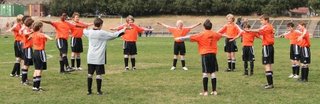 If to everything there is a season, there's nothing like being a middle-aged parent of growing children to sense when autumn is in the air. And, when your own parents have passed away in recent years, you feel yourself growing into their role -- as an elder -- in the family structure. Add to that the prospect of being a grandfather soon, and the picture becomes almost complete. You want to go out and buy some hair dye, some better-fitting clothes, and adjust your diet. You hope that to some people's eyes, at least, you still will be desirable.
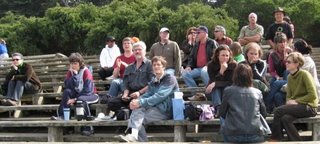 In this context, it becomes clear you simply can't do everything you used to do. Feel one of those unnatural upwellings of strange pains inside your body, as I did this weekend, and all of a sudden, you're acutely aware of how vulnerable we all are; how our lives hang by a thread.
There simply isn't enough time left for all the living I would like to do. Nor for all the writing. If we are, as I claim, what we write, I'd like to quadruple this blog's content, for starters, so that over 1,000 entries could be posted here, cumulatively topping 500,000 words and probably 1500 images. Since I consider this now a "life journal," this has become the main place I'll document my time, my experiences, my feelings and my remaining dreams.
It will continue to be a delicate dance, balancing my own privacy and the privacy of others, with the quest to be unequivocally emotionally and factually honest. But, after all, that is a journalistic and a writerly challenge that is not unfamiliar to me, after forty years of publishing. So, I should be up to the task.
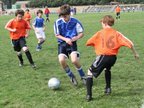
Meanwhile, those in the early spring of their lives conduct such a different dance -- soccer games, math homework, a phone call from a close friend who is a girl telling him her friends want to know whether he is "tall or short." His answer" Why do they want to know?"
It's all relative. One moment, he looks short, skinny, and young. The next he looks tall and wiry, with muscles sprouting on his upper arms. One moment he kisses me as he exits my car for school; the next, he is answering another phone call from a girl.
-30-
 If to everything there is a season, there's nothing like being a middle-aged parent of growing children to sense when autumn is in the air. And, when your own parents have passed away in recent years, you feel yourself growing into their role -- as an elder -- in the family structure. Add to that the prospect of being a grandfather soon, and the picture becomes almost complete. You want to go out and buy some hair dye, some better-fitting clothes, and adjust your diet. You hope that to some people's eyes, at least, you still will be desirable.
 In this context, it becomes clear you simply can't do everything you used to do. Feel one of those unnatural upwellings of strange pains inside your body, as I did this weekend, and all of a sudden, you're acutely aware of how vulnerable we all are; how our lives hang by a thread.
There simply isn't enough time left for all the living I would like to do. Nor for all the writing. If we are, as I claim, what we write, I'd like to quadruple this blog's content, for starters, so that over 1,000 entries could be posted here, cumulatively topping 500,000 words and probably 1500 images. Since I consider this now a "life journal," this has become the main place I'll document my time, my experiences, my feelings and my remaining dreams.
It will continue to be a delicate dance, balancing my own privacy and the privacy of others, with the quest to be unequivocally emotionally and factually honest. But, after all, that is a journalistic and a writerly challenge that is not unfamiliar to me, after forty years of publishing. So, I should be up to the task.

Meanwhile, those in the early spring of their lives conduct such a different dance -- soccer games, math homework, a phone call from a close friend who is a girl telling him her friends want to know whether he is "tall or short." His answer" Why do they want to know?"
It's all relative. One moment, he looks short, skinny, and young. The next he looks tall and wiry, with muscles sprouting on his upper arms. One moment he kisses me as he exits my car for school; the next, he is answering another phone call from a girl.
-30-
Sunday, October 15, 2006
Courageous Actions

Thirty-two years after her mother's body was found floating in the Bay, my friend confronted the man who is the chief suspect in her murder today. I'll be more explicit about this case at some future point.
The man has written a book, apparently a pretty good book. Since his bad old days, when he ended up doing time for another (attempted) murder, he has educated himself, found a career, and in recent years established himself as a writer, as well. He's well spoken, intelligent, and appears today to be a respectable member of his community.
But he did not respond well when my friend asked him to comment about her mother's murder. He didn't answer her question, saying instead that he didn't know the woman. His comrades quickly asked friendlier questions right after he had dismissed my friend's query, and he gratefully went off in long-winded answers to those, never returning to mysterious murder case that happened on his watch, when by his own admission he was taking "military actions" on behalf of the organization he was loyal to.
Afterwards, a reporter went up to question him privately about my friend's mother's case. We'll see whether a story results. What I noticed as I observed this man from the audience today is that his eyes have a deadness to them -- I look I've seen before. It is a characteristic of killers of all types -- assassins, serial killers, and soldiers.
The good that was done today is this man now knows he did not really get away with murder. The case is still out there, ticking like a time bomb in case he, or someone close to him, makes a false step. The statute never runs out on murder...
***

My body is still hurting this evening with a strange pain in my back and side abdomen. I'll try to get that checked tomorrow. I cooked a less-than-successful meal of lamb shanks tonight for the kids -- they tried it but didn't really like it. Now, I'm sipping Sleepy Time Tea, hoping to do something I couldn't do last night, as is implicit in this product's name...
-30-
Sleepless in San Francisco
 Coutesy of photographer Brian Castagne, these action shots of my red-headed soccer player add some brightness and color to a gray, cool, foggy Sunday morning. I'm still in bed in mid-morning, not out of laziness but some sort of sickness, or pain. It was a long night, little of it spent asleep. The darkness has given way to daylight, but not yet to blue skies, sunshine, or warmth.
I approach this day with trepidation. I wish I were well, but today I am not.
Technology has been breaking down around me lately, bringing with it that familiar sense of isolation and frustration. I love Skype but hate it when it suddenly falters. Usually the problem isn't Skype's fault at all, but our computers'.

If this pain subsides, I need to get out to Treasure Island and coach baseball; then to the East Bay for a bookstore reading by the man we believe killed my friends's mother.
Until then, the main reason I wrote this post was to feel a sense of connecting with the world, as I lie here alone.
-30-
Subscribe to:
Posts (Atom)